
Your game's wardrobe, organized.
Asset management for game studios. Keep every skin, variant and bundle in one catalog your team can search, filter and export, instead of four spreadsheets that disagree.


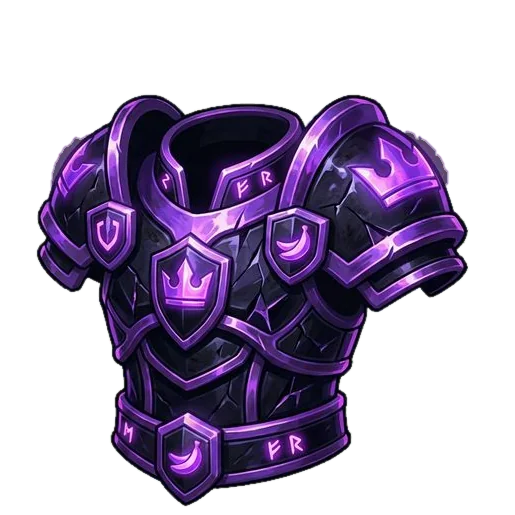


Aegis Pulse
Crownwatch Plate·cwp-v11
Art Done
Common
Lunar Keep
Crownwatch Plate·cwp-v08
Ready for Release
Uncommon
Comet Trace
Crownwatch Plate·cwp-v10
Configured
Rare
Drift Command
Crownwatch Plate·cwp-v12
Ready for Release
Epic
Nova Bulwark
Crownwatch Plate·cwp-v13
Concept Approved
Legendary
A bundle item was already a battle-pass reward, and I found out the day before launch. Then came the frantic reshuffle of store configs and banners.
A bad day most LiveOps managers have had at least once.
Find every place an item already ships.
One item can sell in a bundle and count toward a collection at the same time. Open the variant and both memberships are on the page, weeks before the store config ships.
-
 Ember March aps-v07
Vehicles
Epic
1.0.0
Ember March aps-v07
Vehicles
Epic
1.0.0
It sells inside a recurring 1080 CRN bundle and counts toward the Launch Speeder Lineup collection, which is 5 items of a planned 8. The variant itself is Epic. You read that off this page today, instead of off the store config the day before launch.
One catalog the whole studio reads from.
Each cosmetic is a record. Variants, rarities, statuses and tags live on the item itself, where you can filter, export and query them.
Variant-first
One asset holds its skins, recolors and low-poly versions. Each variant carries its own price, rarity, status and files.
Categories and tags
Nested categories and tags on every record. Filter a two-thousand-item library down to the six you meant.
Roles per project
Invite the team and assign Owner, Editor or Viewer for each project. Viewers never cost a seat.
Activity history
Every edit is logged with the person, the timestamp and the field that changed, so you can answer who moved the price.
MCP server
Point Claude or ChatGPT at your catalog over MCP. Every read, write, search and export operation is exposed as a tool.
Export anytime
Send the whole library to JSON or Excel whenever a publisher, build pipeline or analyst asks for it.
The three screens you will live in.
Browse the whole library.
Filter every variant by category, rarity or tag from one search box. One directory, one copy of each item.
CategoriesRaritiesTags

Open any asset as a record.
Variants, pricing, release versions and raw metadata on one page, versioned together. The spreadsheet cannot hold this.
VariantsPricingRaw metadata

Configure every project.
Set categories, rarities, pipeline statuses and access per project. Every import and API call is validated against them.
Pipeline statusesAccessUsage

Bring the data you already have.
Connect your Google account and pick a spreadsheet, or drop an Excel, JSON or ZIP file. PolyDrobe maps your columns and previews every row, so you fix the errors before anything lands in the catalog.
See the import and export guidesStart free. Pay when the team grows.
The free plan covers 1 project and 100 variants, with no card and no expiry date. Pro costs $12 per seat / month once you outgrow that. Assets are not metered on any plan.
Free
$0/ forever
For solo devs and early prototypes.
- 1 project, up to 3 members
- Unlimited assets, 100 variants
- 1 GB storage
- 30-day activity log
Pro Recommended
$12/ seat · mo
When the team grows past two artists.
- 10 projects, unlimited members
- Unlimited assets & variants
- 50 GB storage
- Google Sheets, REST API, MCP
- 365-day history & full analytics
Only owners & editors are paid. Viewers stay free.
Start free trial Compare plansNeed more capacity? Add Project Packs (+1 project, +5 GB) for $5/mo each.
Everything you'd ask a sales rep.
What is PolyDrobe?
PolyDrobe is a game asset management tool. It holds every skin, variant, rarity and category in your live-ops pipeline as a searchable record, so your team stops tracking shipped versions across spreadsheets and duplicate folders.
How do I get my data in?
Two ways in. Connect your Google account and pick a spreadsheet out of Drive, or drop an Excel, JSON or ZIP file on the project's Import/Export page. Either way PolyDrobe maps your columns and runs a dry-run preview first, so validation errors surface before anything is written. You can export the whole library back out to JSON or Excel anytime.
Is the free plan permanent?
Yes, and it has no expiry date. You get 1 project with up to 3 members, unlimited assets (100 variants), 1 GB of storage, and a 30-day activity log, with no credit card required to start.
How much does PolyDrobe cost?
The free plan is free forever. Pro is $12 per seat / month and includes 10 projects, unlimited members, 50 GB storage, Google Sheets / REST API / MCP, and 365-day history. Only owners and editors are paid; viewers stay free.
Does it have an API or AI integration?
Yes. PolyDrobe ships a REST API and an MCP server, so you can point Claude or ChatGPT at your catalog to run reports, apply bulk edits and answer questions in plain language.
Does it track variants and rarities?
Every asset is a record that versions its variants, rarity, category, tags and custom fields together.
Start free. No card, no per-asset fees.
Create your workspace, import your spreadsheet, and see your whole library as records in under a minute.